Colder mornings have arrived, leaves are piling up, and you’ve already decided the lawn mower deserves a few months off.
Unfortunately, your grass may have other plans.
Knowing when to stop mowing the lawn in fall comes down to grass growth rather than a calendar date. For cool-season lawns in colder regions, the last mow of the season often happens around late October or November, once grass stops actively growing.
A final height of 2 to 2.5 inches can work in some snowy climates, although many lawns are better kept at 3 inches or higher.
Getting the timing right means paying attention to a few changes in your lawn, rather than trying to squeeze in one final cut before a particular date.
When Should You Stop Mowing Your Lawn in Fall?
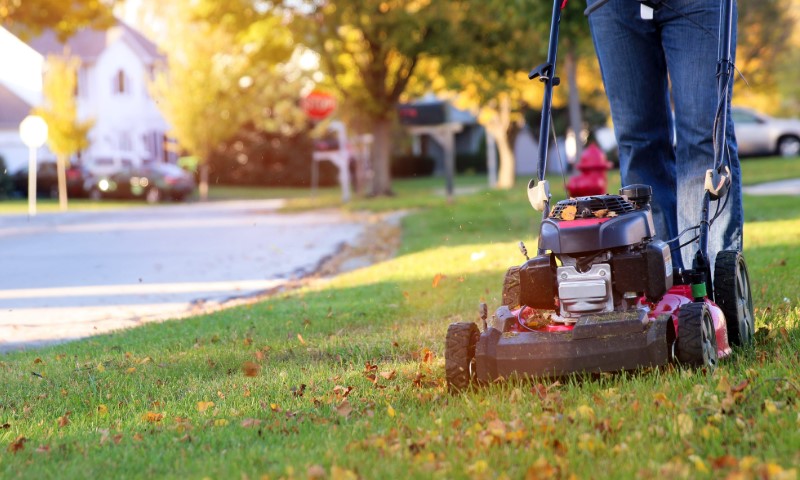
Cool-season grasses, including Kentucky bluegrass, perennial ryegrass, and fescue, can continue growing well into fall. Some even experience stronger growth as summer heat gives way to cooler conditions.
Warm-season grasses generally slow down earlier as temperatures decline and winter dormancy approaches.
According to the University of Minnesota, mowing typically ends around late October in Minnesota, although that timing depends on local weather conditions.
If you’re wondering when to stop mowing the lawn, we recommend checking three things:
| Indicator | When to Stop Mowing |
| Grass growth | No noticeable growth for several weeks as temperatures decline. |
| Soil temperature | Consistently below 50°F, indicating slower cool-season grass growth. |
| Frost timing | Often within a couple of weeks before or after the first hard freeze, depending on grass growth. |
As growth slows, gradually increase the time between mowing sessions. A lawn that needed weekly attention in September might need only one cut every two weeks in late October.
Of course, some homeowners are reconsidering how much grass they want to maintain in the first place.
In Las Vegas, officials are even paying property owners to remove lawns, encouraging the replacement of unnecessary grass with water-saving alternatives.
Your neighbor may have put their mower away three weeks ago, but that doesn’t necessarily mean your lawn is finished growing.
How Short Should You Cut Grass Before Winter?
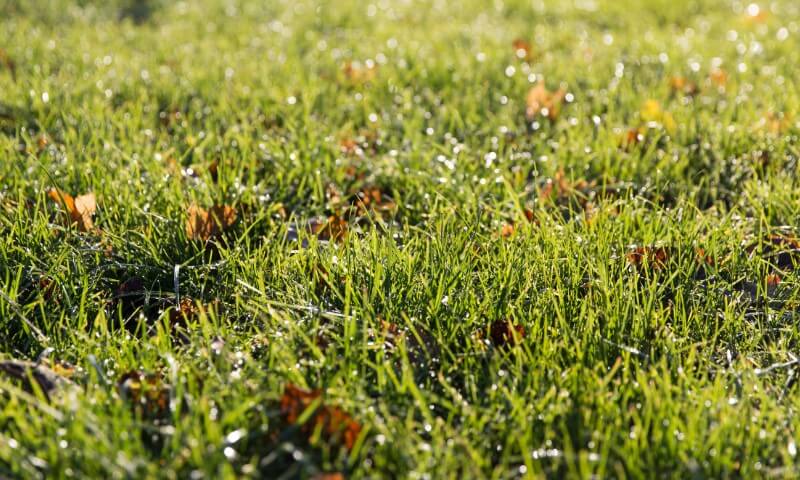
For many cool-season lawns in snowy climates, a final mowing height around 2 to 2.5 inches can work, provided that height suits the grass species and local recommendations.
However, cutting shorter isn’t always necessary.
For example, a typical Midwest residential lawn is often better maintained at 3 inches or higher, including during fall.
Cutting it to 2 inches solely because winter is approaching may create unnecessary stress.
University of Illinois provides mowing height recommendations for common turfgrass species. Those ranges offer a useful starting point when deciding how much grass to leave before winter.
| Grass Type | Suggested Final Mowing Height |
| Kentucky bluegrass | 2-2.5 inches, where locally appropriate |
| Perennial ryegrass | 2-2.5 inches, where locally appropriate |
| Tall fescue | 2.5-3 inches |
| Warm-season grasses | Maintain the normal species-appropriate height |
Some northern lawn care recommendations suggest gradually lowering the final cut to approximately 2-2.5 inches. Other guidance favors maintaining the grass closer to its normal height.
We would use the lower end of the appropriate mowing range only when local conditions justify it.
How to Make the Last Cut of the Season
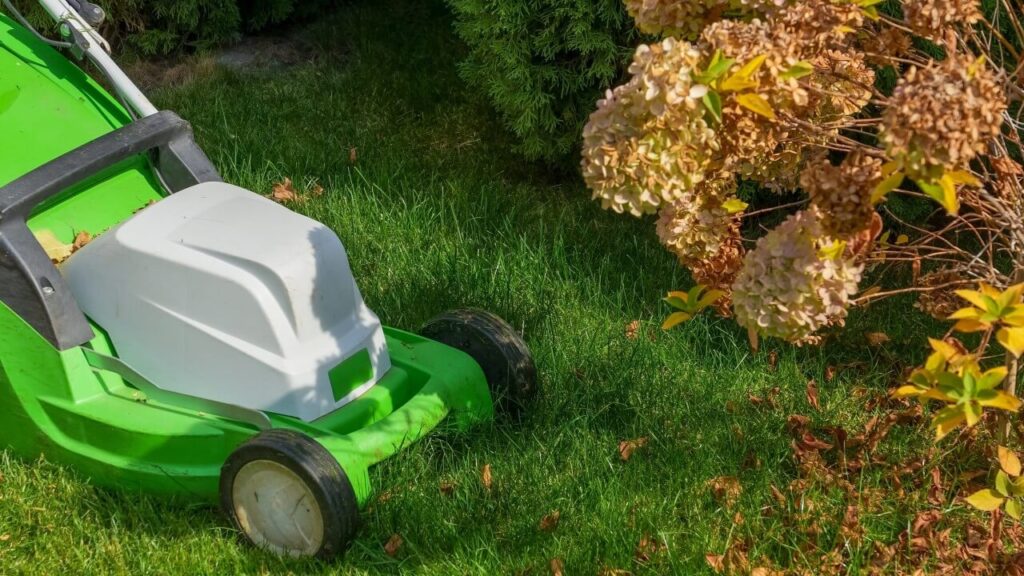
A good final mowing session starts with checking the grass height and ground conditions. Most problems happen when homeowners try to squeeze several weeks of lawn maintenance into one aggressive cut.
We recommend following these steps.
1. Lower the Mower Gradually
If your grass would benefit from a shorter winter height, reduce the mowing setting over the final two or three cuts.
Removing too much leaf tissue at once stresses grass when recovery is already slowing. If your lawn is already at an appropriate height, leave the mower setting alone.
2. Follow the One-Third Rule
Avoid removing more than one-third of the grass blade during a single mowing session.
For example, if your target height is 3 inches, mow before the grass grows taller than approximately 4.5 inches.
Suppose your lawn has reached 6 inches, but you want to bring it back to 3 inches. Cutting it straight down would remove half the blade, considerably more than recommended.
We would make the first cut at approximately 4 inches, then lower the setting on another suitable mowing day if the grass is still actively growing.
If growth has nearly stopped, forcing another aggressive cut may do more harm than leaving it slightly taller.
3. Wait for Dry, Thawed Grass
Choose a day when grass blades are dry, and the ground is reasonably firm.
Wet grass tends to clump, potentially producing an uneven cut. Saturated soil can also develop ruts beneath mower wheels, especially when a heavier mower passes repeatedly over the same area.
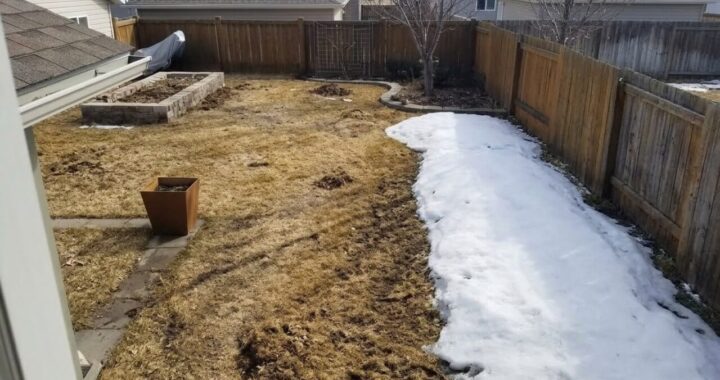
We would postpone mowing if the wheels leave noticeable impressions in soft ground. Fixing those ruts in spring is considerably more work than postponing one mowing session.
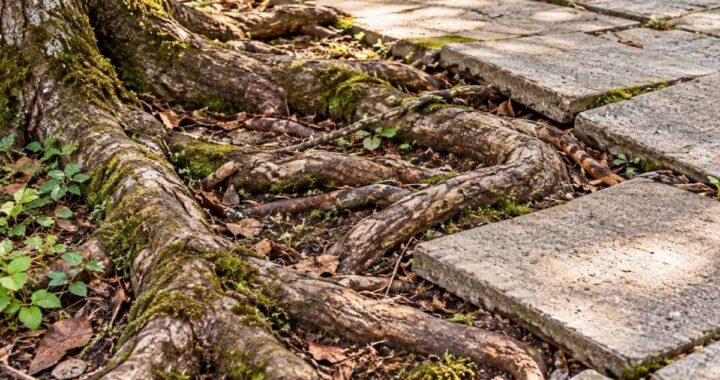
Uneven ground deserves attention, too, particularly near patios and mature trees. If exposed roots are creating bumps in the lawn or lifting patio pavers, check the affected area before mowing. Hitting a raised edge with the mower can turn a routine cut into an equipment problem.
4. Check the Mower Blade
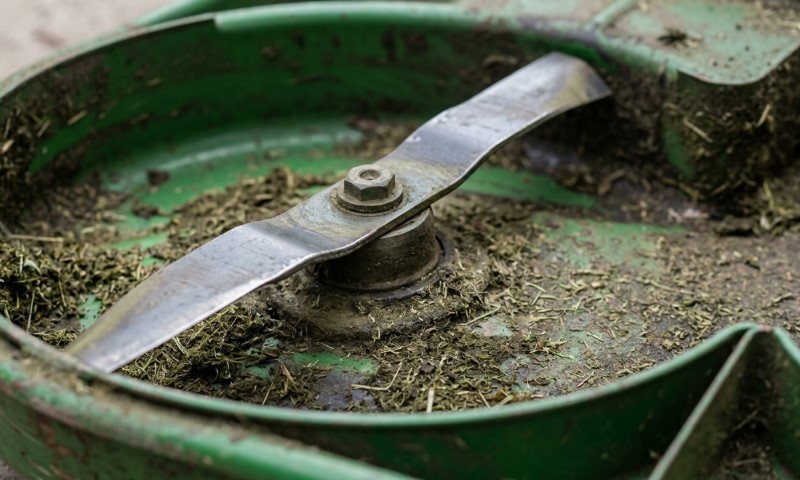
A dull blade tears grass instead of cutting it cleanly.
Those ragged edges lose moisture more easily and can increase susceptibility to disease. Cleanly cut grass also tends to maintain a more even appearance.
We would inspect the blade before the final mowing session, particularly if the grass tips have been looking frayed or brown.
Sometimes the problem isn’t the lawn at all. It’s the piece of metal cutting it.
5. Clear Leaves and Heavy Debris
Mulch a light covering of fallen leaves into small pieces or rake away thicker accumulations.
While clearing leaves around trees, check for exposed roots and uneven ground that could interfere with mowing.
If you’re planning to add trees to the yard, proper tree planting distance can also help prevent future conflicts with driveways, patios, and other areas that need regular maintenance.
Heavy leaf buildup blocks sunlight, holds moisture, and can smother grass during winter.
Once mulched leaves obscure more than 50% of the grass, excess material should be collected.
We generally prefer this approach to removing every fallen leaf. A thin layer of chopped leaves can benefit the soil, but thick accumulations create unnecessary problems.
Finely chopped grass clippings can also stay on the lawn if they’re evenly distributed.
6. Watch for Additional Growth
Mild autumn weather can encourage another period of growth, particularly in cool-season lawns.
If your grass becomes noticeably taller after what you thought was the final mowing session, another cut may be worthwhile.
Before starting, check the height and conditions rather than assuming the lawn needs attention simply because a few warmer days have passed.
Can You Mow After the First Frost?
View this post on Instagram
Yes, you can mow after the first frost if your grass is still growing and has completely thawed.
A light frost doesn’t automatically end the growing season. Cool-season grasses can continue developing during mild periods, even after several frosty mornings.
However, mowing frozen grass can cause damage.
Frozen blades become brittle and may break beneath mower wheels or foot traffic. Damage can appear as brown tracks or footprints once the grass thaws.
We recommend waiting until frost has completely melted and the grass has dried. Check the soil as well, since a thawed surface can still be too wet to support a mower without developing ruts.
Some fall lawn care schedules suggest making the final cut approximately one week before the expected first frost.
We wouldn’t treat that as a strict deadline.
The Bottom Line
Deciding when to stop mowing the lawn in fall is simpler when you focus on growth instead of trying to choose the perfect date.
If your grass has stopped growing and is already at a healthy height, put the mower away. If it’s still getting taller, continue cutting at an appropriate height when weather and ground conditions allow.
For the last mow of the season, choose a cutting height that suits your grass type instead of automatically lowering the mower to 2 inches.
And if the grass is already short enough, there’s no reason to drag the mower out for one more ceremonial lap.