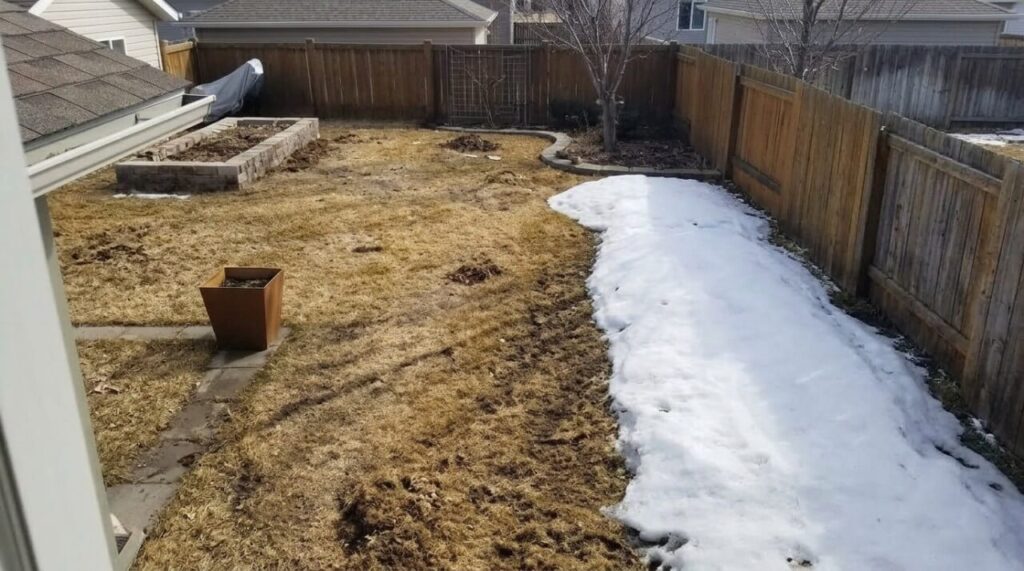
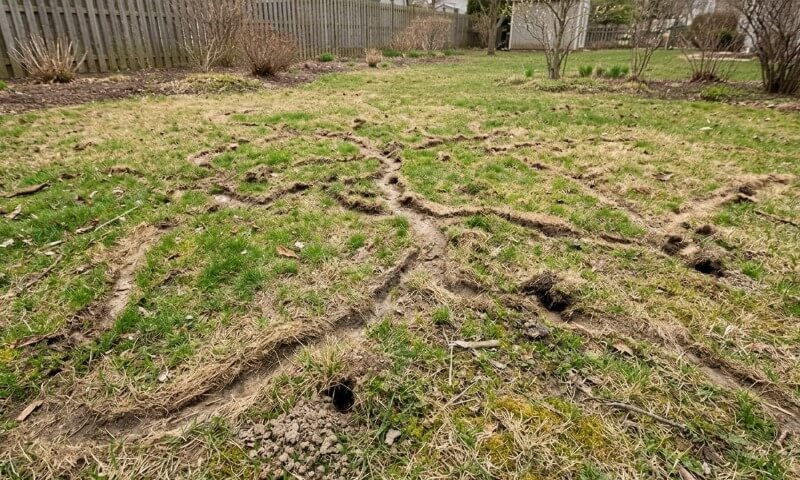
Snow finally melts, and your lawn looks as though someone spent the winter drawing winding roads through the grass. Narrow brown trails twist across the yard, cutting through patches that looked perfectly healthy before winter arrived.
Unfortunately, your lawn had some very small, very busy visitors.
Vole trails in lawn areas are a common sign of winter rodent activity. Voles are small rodents that travel beneath snow, clipping grass and creating pathways as they search for food.
Fortunately, those trails often look worse than they are.
Much of the grass may recover naturally, and repairing the rest usually requires little more than a rake, some grass seed, and patience.
Why Voles Leave Winding Trails After the Snow Melts
Voles resemble stocky mice with short tails, small ears, and rounded bodies.
Unlike some animals that become inactive during winter, voles continue feeding and moving around even when snow covers the ground.
Snow actually makes their work easier.
A layer of snow insulates the ground and provides protection against predators. Beneath that cover, voles move through grassy areas, clipping vegetation and following established routes between feeding spots and sheltered locations.
Repeated movement creates narrow surface runways, usually 1 to 2 inches wide.
Colorado State University identifies these paths as a common sign of vole activity, particularly when they cut through matted grass.
If your lawn has a network of winding trails about the width of two fingers, voles are reasonable suspects. Apparently, even small rodents appreciate a well-established route to dinner.
According to Cornell University Library information on voles, meadow voles maintain these pathways by cutting vegetation close to the ground.
Once the snow disappears, homeowners can see the network of flattened, clipped, or brown grass.
Several yard conditions make vole activity more likely:
- Tall or matted grass that provides protective cover.
- Thick layers of fallen leaves left through winter.
- Heavy mulch around trees and garden beds.
- Dense weeds and vegetation near lawn edges.
- Sheltered spaces beneath shrubs, logs, and yard debris.
None of these conditions guarantees a vole problem. However, they give rodents additional places to hide while feeding.
An open lawn may seem like an unlikely place for a small rodent to spend winter. Add several inches of snow, though, and that exposed grass suddenly becomes a relatively protected network of feeding routes.
How to Tell If Those Trails Were Made by Voles
View this post on Instagram
Not every strange mark in a lawn comes courtesy of voles. Moles, snow mold, and other winter conditions can also leave grass looking considerably less impressive in spring.
Fortunately, vole runways have several recognizable characteristics.
Look for narrow, winding paths pressed into the grass, often connecting shrubs, garden beds, and small openings in the ground.
Runways typically follow irregular routes rather than straight lines. Some form branching networks, while others circle around sheltered areas.
Most importantly, vole trails usually appear at ground level without raised soil ridges.
Moles behave differently. They dig tunnels beneath the soil, often pushing the surface upward and creating noticeable ridges or mounds.
A quick comparison can help narrow down the cause.
| What You Notice | Likely Explanation |
| Narrow, winding trails in flattened grass | Voles |
| Raised soil ridges or molehills | Moles |
| Gray or pinkish patches of matted grass | Possible snow mold |
| Small openings connected by surface paths | Possible vole activity |
| Chewed bark near tree or shrub bases | Possible vole feeding |
We would also inspect nearby trees and shrubs before deciding the problem is limited to grass.
Voles sometimes chew bark around the base of young trees, particularly when other food becomes scarce during winter.
They may also damage bulbs, roots, and ornamental plants.
Freshly clipped vegetation and small droppings along a runway can suggest recent activity.
Older paths containing new plant growth or debris may no longer be in use.
One useful distinction comes down to soil movement.
If you can follow the winding trail without finding raised earth beneath it, meadow voles are a more likely explanation than moles.
Will Grass Grow Back After Vole Damage?
Seeing brown trails across an otherwise green lawn can make reseeding everything seem like the obvious solution.
Fortunately, that is often unnecessary.
Most vole runways involve flattened or clipped vegetation rather than extensive soil disturbance. Grass can recover when its roots and growing points survive.
Grass plants have growing tissue near the base, commonly called the crown. If that crown is healthy, new leaves can develop even after the upper blades have been damaged.
According to the University of Minnesota’s lawn diagnostic information, vole activity typically does not kill grass plants, although affected areas may green up more slowly during spring.
Recovery depends on several conditions, including grass species, soil moisture, winter severity, and how extensively the voles damaged the plants.
A useful example is a lawn with several winding trails near a shrub bed.
If grass blades are simply flattened and the underlying crowns are healthy, gently lifting the grass may be enough to encourage recovery. If individual strips are completely bare, with no signs of living grass after suitable growing conditions return, those sections may need seed.
We would avoid judging the damage immediately after snowmelt. Cold soil can delay grass growth, making healthy but dormant areas look worse than they actually are.
Give the lawn a few weeks of suitable spring growing weather before deciding which sections need repair.
How to Repair Vole Trails in Your Lawn
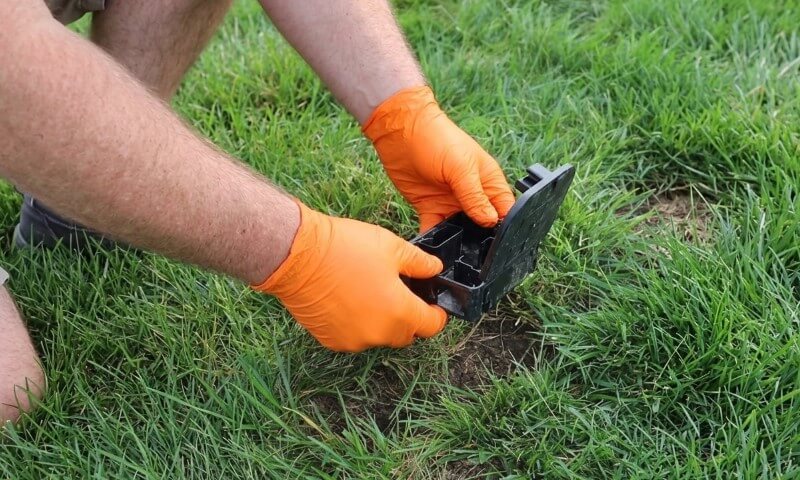
Repairing vole trails is usually straightforward, particularly when the rodents have only damaged the grass above the soil.
Start with the least disruptive solution and move toward reseeding only where necessary.
Gently Rake the Damaged Grass
Before reaching for grass seed, get a leaf rake.
Wait until the ground has thawed and dried enough that walking across it does not leave footprints or compress the soil.
Use a flexible leaf rake to gently lift flattened grass along the runways. Remove loose, dead material without pulling aggressively at the living turf.
Raking helps separate matted blades, improving light exposure and air circulation around surviving grass.
Avoid using a heavy garden rake or digging into the soil unless the area is already bare and requires reseeding.
Aggressive raking can damage grass crowns that might otherwise recover.
A lawn that has already endured several months of rodent traffic probably does not need an enthusiastic homeowner removing its surviving roots.
Give the Lawn Time to Recover
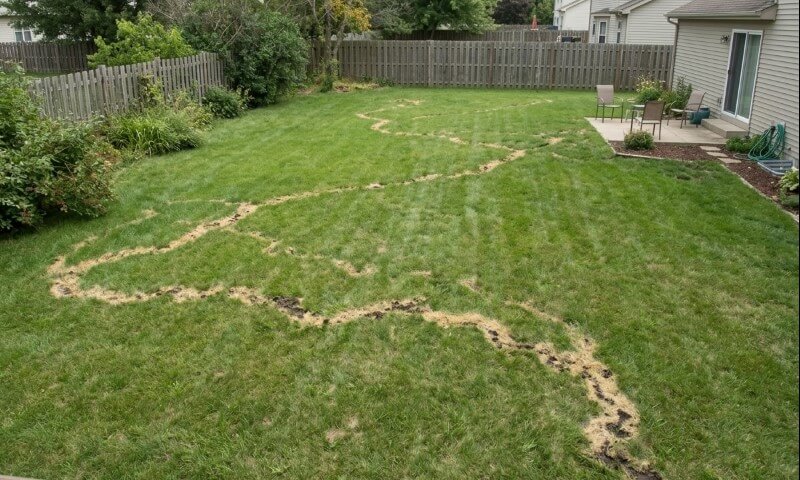
Once the grass has been lifted, allow it to grow.
Watch for fresh green shoots appearing along the trails during the next few weeks of active growth.
Recovery may take longer when temperatures stay low or the soil is excessively wet.
We would monitor three things before attempting further repairs:
- New green growth indicates that surviving grass plants are recovering.
- Bare soil suggests that plants may have been removed or killed.
- Continued browning could indicate more extensive damage or another lawn problem.
For example, imagine a 20-foot vole runway with only three feet of completely bare soil.
Reseeding the entire 20-foot trail would waste seed and potentially disturb healthy grass. Raking the full path and repairing only the three-foot bare section is a more sensible approach.
Avoid unnecessary dethatching, heavy foot traffic, or excessive fertilizer while the lawn is recovering.
Reseed Any Bare Areas
Some trails will not recover on their own.
If grass crowns have been destroyed or entire strips are bare, reseeding can restore the damaged sections.
First, loosen the upper layer of exposed soil to create a suitable seedbed. Remove dead material, then spread grass seed appropriate for your existing lawn and regional growing conditions.
Lightly rake the seed into the surface to improve seed-to-soil contact.
Keep the area consistently moist during germination, without allowing water to pool or wash the seed away.
For cool-season grasses, spring can provide suitable growing conditions, although early fall is generally preferable for establishing new turf in many regions.
Warm-season grasses are usually best seeded during late spring or early summer, when soil temperatures support germination.
Avoid mowing newly seeded areas until the grass reaches the recommended height for its species and is sufficiently established.
Before buying enough grass seed to renovate the entire yard, try a rake and a little patience. Some of those trails may disappear once the grass starts growing again.
The Bottom Line
Winding brown trails after snowmelt usually indicate that voles spent winter moving and feeding beneath the snow.
If the grass is flattened but still alive, start with gentle raking and allow normal spring growth to do some of the repair work. Reseed sections that stay bare once growing conditions improve.
Check nearby trees and shrubs for bark damage, since that can be considerably more serious than a few brown lines across the yard.
Before next winter, reduce excessive vegetation, clear leaf piles, and protect vulnerable young trees.
If the grass starts filling in after a little raking, there is no reason to turn a few vole trails into a major lawn renovation. Repair what does not recover, remove the shelter that encourages repeat activity, and let the grass get back to doing its job.