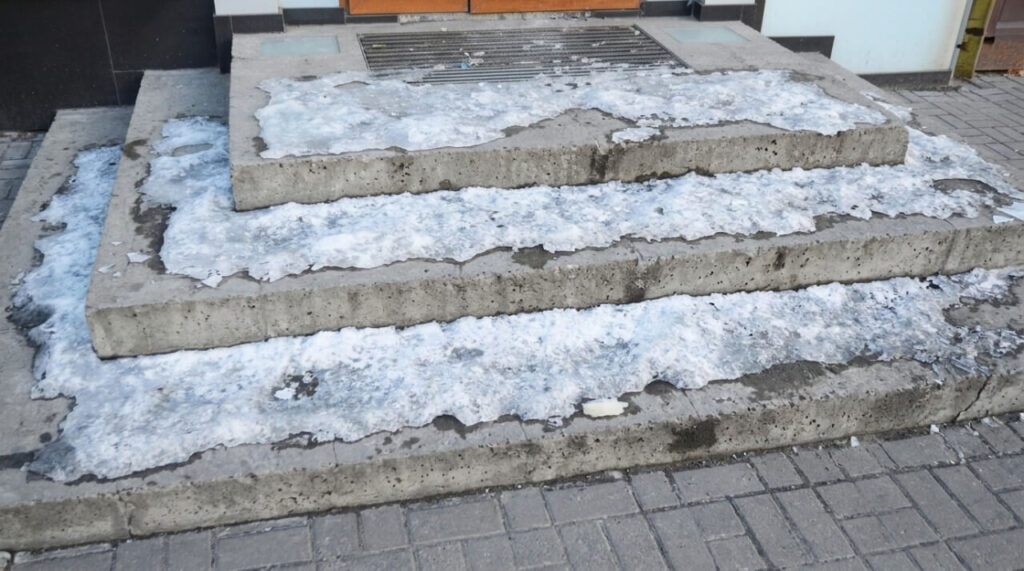
Your concrete steps survived another winter without anyone slipping. Unfortunately, the steps themselves may not have come through quite as well.
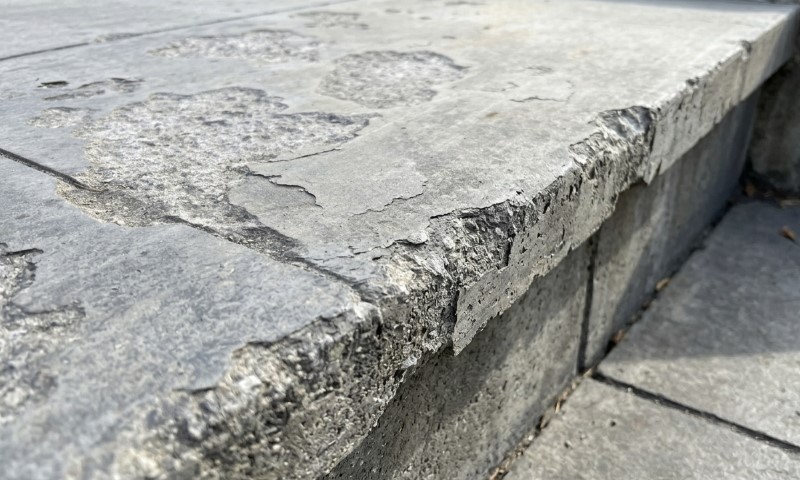
What looked like a perfectly solid surface in December now has rough patches, chipped corners, and small pieces of concrete scattered near the bottom stair.
You used ice melt to prevent an accident, not to give yourself a masonry project in April.
Ice melt can contribute to concrete damage, particularly when salty water enters the surface and repeatedly freezes and thaws. Certain deicing chemicals can also cause deterioration through chemical reactions or corrosion of embedded steel.
Fortunately, keeping steps safe doesn’t require covering them with chemicals every time temperatures fall.
Choosing the right product, removing snow promptly, and controlling moisture can help prevent the damage that makes concrete repairs necessary.
Why Ice Melt Can Damage Concrete Steps
View this post on Instagram
Most concrete damage linked to ice melt develops gradually. One application isn’t usually enough to ruin a properly installed staircase, but repeated winter exposure can create problems.
Concrete contains microscopic pores that absorb moisture. Melted snow and salty water can enter these openings, particularly around existing cracks or poorly finished areas.
When temperatures fall, trapped water freezes and expands.
Enough pressure can cause the surface to fracture, eventually producing the familiar flaking and peeling known as scaling.
Water expands by 9% when it freezes, which helps explain why moisture trapped inside concrete can be destructive.
Properly air-entrained concrete contains tiny air pockets that allow freezing water to expand without placing as much pressure on the surrounding material. Concrete without adequate air entrainment is more susceptible to freeze-thaw deterioration.
Research and technical guidance published by the Federal Highway Administration also identify increased moisture saturation, salt-related pressure, and chemical reactions as mechanisms involved in deicer-related concrete deterioration.
Ice melt complicates the situation by creating a salt solution called brine. It lowers water’s freezing point, but it doesn’t guarantee that the liquid will stay unfrozen.
Some Ice Melters Are Harder on Concrete Than Others
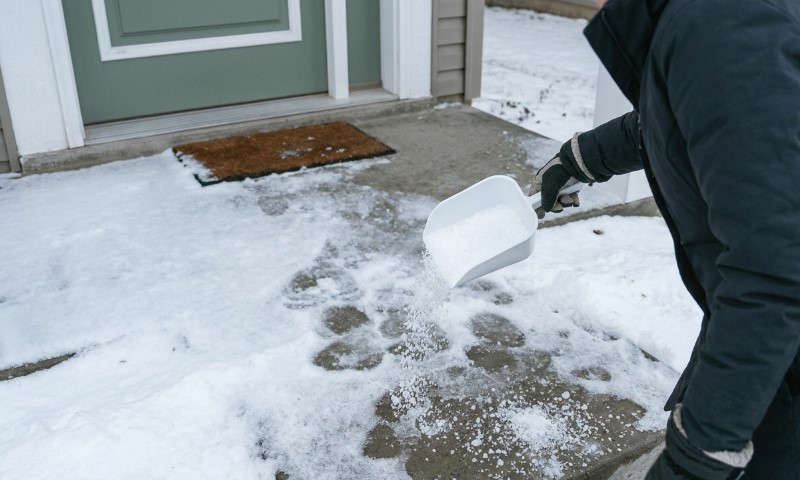
A product advertised to melt ice at extremely low temperatures might sound like the obvious choice. Unfortunately, its ability to remove ice says little about its effect on concrete.
Chemical composition, temperature, application rate, and surface condition all matter.
Here is how common ice-melting materials compare:
| Product | What Homeowners Should Know |
| Rock salt | Cheap, but can damage concrete and steel. |
| Calcium chloride | Works down to -25°F, but may damage concrete. |
| Magnesium chloride | Effective in cold weather, but may harm concrete and plants. |
| CMA | Less corrosive, but costly and less effective in some conditions. |
| Urea-based deicers | Chloride-free, best above 25°F. |
| Sand | Improves traction without melting ice. |
Rock salt is often the cheapest option, which helps explain its popularity. However, using it heavily on damaged concrete can increase exposure to moisture and chlorides.
Calcium chloride offers better low-temperature performance, but greater melting capability doesn’t automatically make it gentler on your steps.
CMA presents a different trade-off. Its lower corrosion potential makes it worth considering around sensitive materials, although higher costs and reduced effectiveness under certain conditions limit its practicality.
Urea-based products also avoid chlorides, but they have temperature limitations and can introduce nutrients into nearby soil and waterways.
Sand takes another approach entirely. Rather than removing the ice, it creates a more textured surface that improves traction.
For stairs already showing damage, we would consider sand before experimenting with another chemical treatment.
One important distinction is that “concrete safe” doesn’t mean risk-free. Even products marketed for concrete should be used according to their instructions, and some surfaces shouldn’t receive chemical deicers at all.
Federal Highway Administration research identifies solutions containing 3% to 4% salt by weight as particularly damaging to concrete surfaces under certain freezing conditions.
Simply using less salt isn’t a guaranteed fix, especially when melting snow dilutes whatever you’ve applied. Removing slush and reducing repeated exposure are still important.
How to Keep Your Steps Safe Without Damaging the Concrete
Preventing damage is generally easier than repairing several winters of deterioration.
Fortunately, the most useful precautions involve ordinary winter maintenance rather than purchasing specialized products.
New York winter maintenance advice suggests that roughly 12 ounces of salt can be enough for a 20-foot driveway under suitable conditions.
A few concrete steps need considerably less coverage. We would rather distribute a small amount properly than leave piles of unused salt sitting around until the next snowfall.
Clear Snow Before Foot Traffic Packs It Down
Snow becomes much harder to remove once people have repeatedly walked across it.
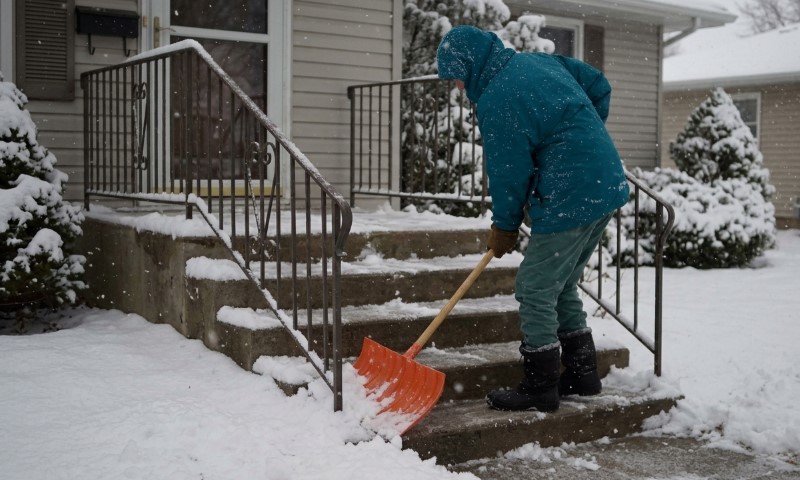
Instead of allowing a compacted layer to develop, shovel the steps as soon as conditions allow.
Use a plastic or rubber-edged shovel, especially on older concrete with worn corners.
Aggressive scraping with a sharp metal tool may remove stubborn ice, but it can also chip the surface you’re trying to protect.
Stop Treating Ice Melt Like Ordinary Salt
A handful scattered across every step might seem reasonable. Another handful for good measure usually isn’t necessary.
Manufacturers provide application rates because excessive material doesn’t always produce better melting results.
Use a handheld or push-type spreader to distribute granules evenly and avoid concentrated piles.
Pay particular attention to stair edges and visible cracks, where repeated moisture exposure may cause further deterioration.
Kentucky transportation guidance gives one pound of salt per 100 square feet as an effective residential sidewalk application rate when temperatures are at least 25°F.
Your front steps probably cover considerably less ground, so emptying half a bag onto them is unlikely to be necessary. Check the product’s instructions and start with the recommended amount.
Get Rid of Melted Slush
Applying deicer is only part of the job.
Once ice softens, remove the loosened material before temperatures drop again.
Consider a staircase that receives afternoon sunlight but freezes after sunset.
At 35°F, melting ice may leave water collecting near the edges. By nighttime, a temperature of 20°F can turn that moisture back into ice.
If cracks are present, some water may already have entered the concrete.
Removing slush during the warmer part of the day reduces the amount of moisture left to refreeze. It also helps prevent another slippery surface the following morning.
Give Damaged and New Concrete Extra Protection
Not every concrete surface is suitable for ice-melting chemicals.
We would avoid applying chemical deicers to concrete less than one year old as a conservative precaution, particularly when the installer advises against them.
Precast steps and surfaces that are already cracked, chipped, or spalling also require caution.
For these surfaces, sand can provide traction without additional salt exposure.
However, sand won’t remove existing ice. Proper snow removal and attention to slippery areas are still essential.
Keep Water Out of the Concrete
A suitable water-repellent sealer can limit moisture absorption and reduce exposure to damaging freeze-thaw conditions.
Before applying one, inspect the concrete for cracks and deteriorated sections. Repair suitable minor damage and follow the sealer manufacturer’s surface preparation instructions.
Some sealers need reapplication approximately every two to three years, although actual maintenance intervals depend on the product, traffic, and weather exposure.
Don’t overlook drainage.
If water repeatedly collects on one stair, investigate nearby downspouts, runoff patterns, or poor surface drainage.
Sealing a staircase without addressing persistent standing water may provide only limited protection.
Consider Permanent Traction Solutions
Some front steps develop ice so frequently that winter maintenance starts feeling like a second job.
Anti-slip stair treads can improve grip, while properly rated outdoor heated mats can reduce ice accumulation in suitable locations.
Heated mats require compatible electrical protection and installation according to their manufacturer’s instructions.
Neither solution is necessary for every home.
We would try better snow removal, controlled deicer application, and improved drainage before investing in additional equipment.
What to Do if Your Concrete Steps Are Already Crumbling
Once concrete starts breaking apart, the next question is how much damage you’re actually dealing with.
A few loose surface flakes aren’t equivalent to a staircase with moving sections or severely damaged edges.
Repair decisions should follow the condition of the concrete rather than the appearance of the problem alone.
Identify the Damage Before Repairing It
| Visible Problem | Recommended Action |
| Thin surface flakes | Remove loose material and apply a suitable resurfacer. |
| Small cracks | Clean and fill with exterior concrete repair material. |
| Chipped stair corners | Repair with an edge patching product if the concrete is sound. |
| Recurring crumbling | Check drainage, sealant, and deicer exposure. |
| Large cracks or unstable sections | Have a professional inspect the steps. |
Surface scaling generally begins with small sections peeling away. More advanced damage can expose coarse aggregate and create uneven areas.
Minor deterioration may be repairable with suitable concrete repair products, provided the underlying material is stable.
However, applying a new coating over loose concrete is rarely a lasting solution.
Proper repairs require removing unsound material, cleaning the area, and selecting a product designed for exterior exposure.
Application temperature and curing conditions are equally important. Many repair compounds shouldn’t be installed during freezing weather without special precautions.
Find Out Why the Damage Keeps Returning
If a repaired section starts crumbling again after the next winter, something is still exposing the concrete to damaging conditions.
Look for areas where snowmelt accumulates, cracks that allow water penetration, or sections receiving repeated heavy applications of deicer.
Comparing different parts of the staircase can provide useful clues.
For example, damage concentrated along the outer edges may indicate frequent water exposure or salt accumulation. Cracking across several steps could suggest movement or a more serious structural problem.
Those patterns aren’t conclusive diagnoses, but they can help determine what deserves attention first.
Keep the Ice Off Without Wearing Out the Steps
Keeping concrete steps clear doesn’t require choosing between slippery stairs and damaged concrete.
We would focus on removing snow early, using a suitable ice melter at the recommended rate, and clearing slush before it refreezes.
For newly poured, precast, or deteriorating concrete, traction alternatives and careful moisture control deserve greater attention.
If your steps are already flaking, identify the source of the moisture and repair suitable damage before winter returns.
Changing how you manage ice now may prevent another spring spent sweeping pieces of your staircase off the walkway.