Your garage is freezing, your freezer has barely made a sound all day, and now you’re wondering if the food inside is actually staying frozen.
You would think a freezer would appreciate a cold garage. After all, half its job is already being done for it. Unfortunately, some freezers are surprisingly particular about how cold their surroundings get.
Certain models handle freezing temperatures without trouble. Others struggle once conditions fall outside their approved operating range.
Knowing your freezer’s temperature limits is the first step toward keeping your food safe.
Can You Keep a Freezer in an Unheated Garage During Winter?
Yes, provided the freezer is rated for the temperatures your garage reaches.
General guidance recommends avoiding ambient temperatures below 0°F (-18°C) or above 110°F (43°C), as these extremes can damage some freezers.
However, manufacturer specifications take priority.
Garage-ready freezers are designed for wider temperature ranges, although performance varies between models. Testing has found differences in temperature control even among appliances advertised as garage-ready.
Chest freezers are often suitable for garage storage. Some models operate in ambient temperatures as low as 5°F (-15°C), while others are rated down to 0°F (-18°C).
An attached, insulated garage may stay considerably warmer than an uninsulated structure.
We would check the manufacturer’s operating temperature range before deciding that a freezer needs relocating.
What Happens to a Freezer When the Garage Gets Too Cold?
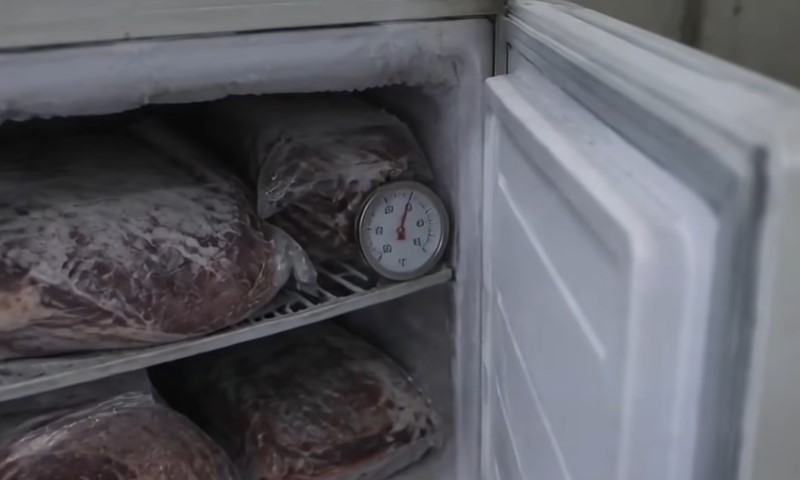
Cold temperatures can interfere with a freezer’s cooling system, particularly when the appliance operates outside its approved ambient temperature range.
The Freezer May Stop Cooling Properly
Freezers rely on a thermostat and compressor to maintain their internal temperature. When surrounding conditions become unsuitable, temperature controls may not respond as intended.
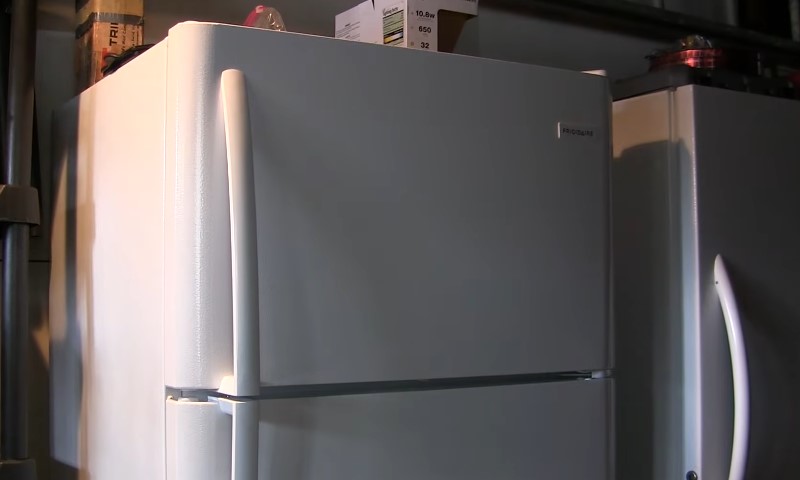
Refrigerator-freezer combinations are particularly vulnerable. Some models use a thermostat in the refrigerator compartment to control cooling for both sections.
If the garage is already colder than the refrigerator’s target temperature, the thermostat may not activate the compressor frequently enough. Meanwhile, the freezer compartment can gradually become too warm.
Standalone freezers typically have dedicated temperature controls, but they still need suitable operating conditions.
A freezer running less frequently during winter isn’t necessarily malfunctioning. Cooler surroundings reduce cooling demand, so internal temperature readings are more useful than compressor noise.
Your Frozen Food Could Be at Risk
A properly functioning freezer should maintain 0°F (-18°C) or lower internally.
If cooling becomes unreliable, food may partially thaw or take longer to freeze. One homeowner reported that their garage refrigerator’s freezer compartment reached temperatures in the 20s°F during cold weather.
A full freezer can hold a safe temperature for approximately 48 hours without power, while a half-full one generally manages around 24 hours, provided the door stays closed. Those figures apply to power outages, not every cooling malfunction. Still, they explain why food can feel frozen long after an appliance has stopped cooling properly.
A garage temperature of 25°F might sound cold enough for frozen food, but it’s considerably warmer than the recommended storage temperature.
Food that still contains ice crystals or measures 40°F or lower can generally be refrozen or cooked. Perishable food held above 40°F for more than two hours should be discarded.
We would use a freezer thermometer rather than assuming cold garage air is keeping everything safe.
How Cold Is Too Cold for a Garage Freezer?
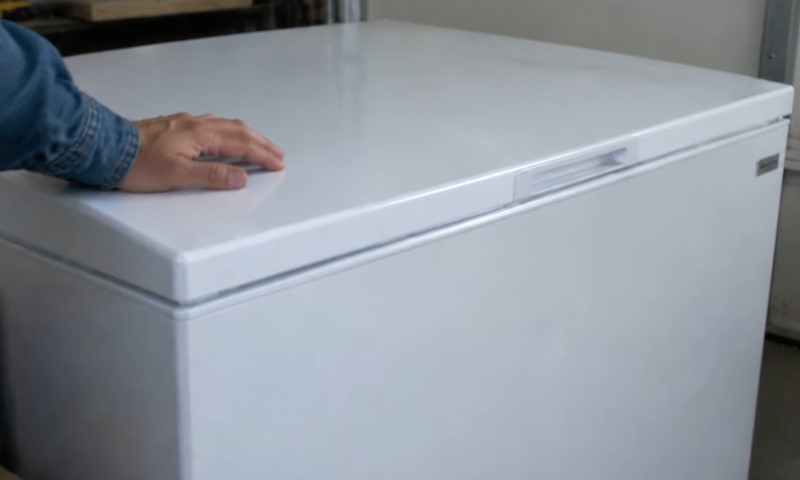
Temperature limits depend on the appliance’s design and climate rating.
| Garage Temperature | What It Means |
| Above 32°F (0°C) | May be suitable if within the freezer’s approved range. |
| 0°F to 32°F (-18°C to 0°C) | Suitable for certain garage-ready models, but potentially too cold for standard freezers. |
| Below 0°F (-18°C) | Outside the approved range of many garage-ready models. |
Always use your manufacturer’s minimum operating temperature as the deciding factor.
We would also place a thermometer in the garage and check overnight readings.
Insulation, attached walls, and exposure to outdoor conditions can make garage temperatures different than the weather forecast suggests.
How to Tell If Your Freezer Is Working Properly in a Cold Garage
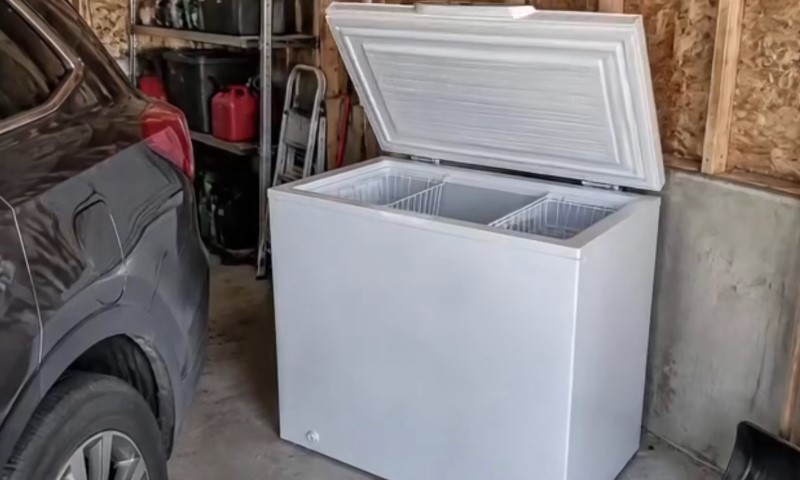
An unusually quiet compressor doesn’t automatically indicate a problem. Checking internal temperatures and food conditions will give you a better idea of how the appliance is performing.
Start with these inspections:
| What to Check | What to Look For |
| Internal temperature | Consistently at 0°F (-18°C) or lower. |
| Frozen food | No softening, leaking, or signs of partial thawing. |
| Door seal | Clean, undamaged gasket that closes tightly. |
| Compressor operation | Less frequent cycling is normal if internal temperatures stay stable. |
| Temperature recovery | Freezer returns to 0°F after adding groceries. |
Repeated warming and refreezing can damage food quality. Temperature fluctuations encourage ice crystals to grow, which can affect texture as food thaws.
You might not notice anything wrong until dinner, when frozen vegetables turn out noticeably softer than expected.
Keeping the freezer consistently at 0°F or lower helps limit that damage.
How to Protect Your Freezer During Winter
Even a garage-ready freezer needs proper installation and protection against moisture.
A few precautions can help prevent avoidable problems:
| Precaution | Why It Matters |
| Keep the area dry | Helps prevent corrosion and moisture damage. |
| Allow ventilation | Prevents overheating and supports efficient operation. |
| Use a suitable outlet | Reduces electrical hazards and voltage problems. |
| Install a temperature alarm | Warns of unexpected internal temperature increases. |
| Avoid improvised insulation | Prevents blocked ventilation and operating problems. |
| Relocate when necessary | Prevents operation outside the approved temperature range. |
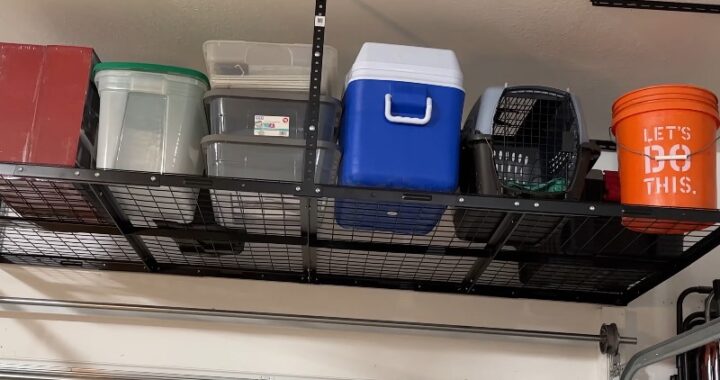
Keeping enough space around the freezer for ventilation can be tricky when the garage doubles as a storage room. Moving boxes and equipment onto overhead racks might free up floor space, but check how much weight your garage ceiling can safely support before hanging everything above your head.
A crowded garage is annoying. A collapsed storage rack is considerably worse.
Chest freezers can have an advantage in electricity consumption. ENERGY STAR estimates annual usage of around 215 kWh for a certified chest freezer, compared with 395 kWh for a certified upright model.
That doesn’t automatically make a chest freezer better for every garage, but it gives homeowners another factor to consider when choosing a replacement.
However, properly rated upright freezers can also work well in garages.
Should You Move Your Freezer Indoors During Winter?
Moving the freezer depends on its temperature rating and actual performance.
Keep it in the garage if the manufacturer’s approved operating range includes your garage’s coldest temperatures and the appliance consistently maintains 0°F (-18°C) internally.
Consider relocating it if garage temperatures regularly fall below that range or internal readings become unreliable.
A garage-ready replacement may make sense if you need permanent garage storage and your existing freezer isn’t suitable.
Homeowner experiences vary considerably. Some report decades of successful freezer operation in unheated garages. Others describe cooling failures during cold weather or moisture-related corrosion.
If your freezer is rated for the cold and its internal temperature stays at 0°F or lower, there’s little reason to move it.
If it cannot operate reliably in your garage, relocation is considerably less expensive than replacing an entire freezer’s worth of food.