Keeping grass alive already takes water, mowing, fertilizer, and patience. In Las Vegas, officials may actually pay property owners to stop trying. Southern Nevada gets about 90% of its water through the Colorado River, which makes decorative grass difficult to justify in the Mojave Desert.
A lawn normally becomes expensive when it dies. Las Vegas officials are increasingly concerned about how much water it takes to keep one alive.
One question matters most. Which grass is useful, and which grass is being watered mostly because somebody planted it years ago?
Why Las Vegas Wants Less Grass
Southern Nevada receives roughly 300,000 acre-feet of Colorado River water annually, plus about 47,000 acre-feet of local groundwater. Indoor water can often be treated, returned to Lake Mead, and counted toward return-flow credits. Water sprayed across grass is different. Much of it evaporates or enters the soil, so it cannot be recovered in the same way.
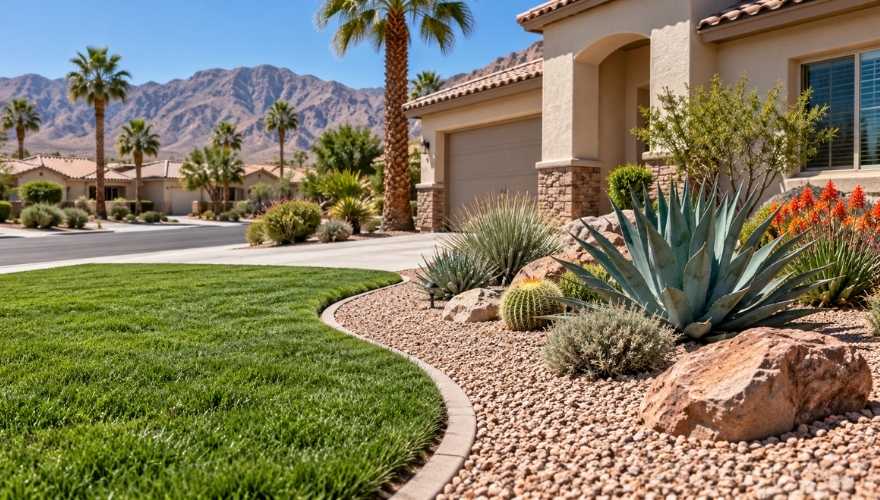
SNWA estimates that replacing one square foot of grass with desert-adapted planting saves about 55 gallons of water per year. One square foot sounds minor. A 2,000-square-foot patch adds up to roughly 110,000 gallons annually.
Sprinklers may only run for a few minutes, but they are rarely watering one square foot. We would start with turf receiving regular irrigation without providing much practical use.
How Cash for Grass Works
SNWA began encouraging turf removal in 1999, with financial incentives becoming an important conservation tool.
By 2023, conservation efforts had helped cut per-person water use roughly in half even as Clark County added close to 1 million residents. Public parks are now part of the effort. During 2026, SNWA approved about $4 million in rebates for 17 projects across 15 Las Vegas parks.
Starting in January 2027, Colorado River water generally cannot irrigate designated nonfunctional turf. Nonfunctional turf is essentially grass using water without providing much recreation or another practical purpose.
Parking islands and decorative roadside strips are common examples. It is a little like keeping an appliance plugged in even though nobody remembers what it does.
Homeowners can apply the same test. A backyard used by children or pets has an obvious job. A narrow strip beside the driveway may mostly be keeping the sprinkler system busy.
Tearing Out Grass Creates Another Question
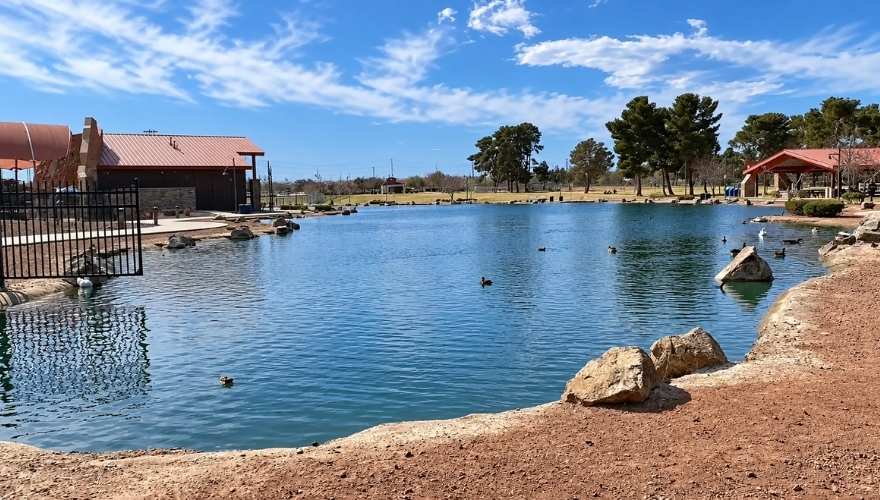
Most park turf being converted in Las Vegas is expected to become drought-tolerant planting or other water-smart surfaces. Some areas are also being repurposed for amenities such as pickleball courts and a pool.
Only two of the 15 parks involved in the current rebate work are expected to receive artificial turf. Heat helps explain why that distinction matters.
A 2008 UNLV study measured artificial turf temperatures as high as 169°F. Saving water is useful. Creating a surface nobody wants to touch in July is less useful.
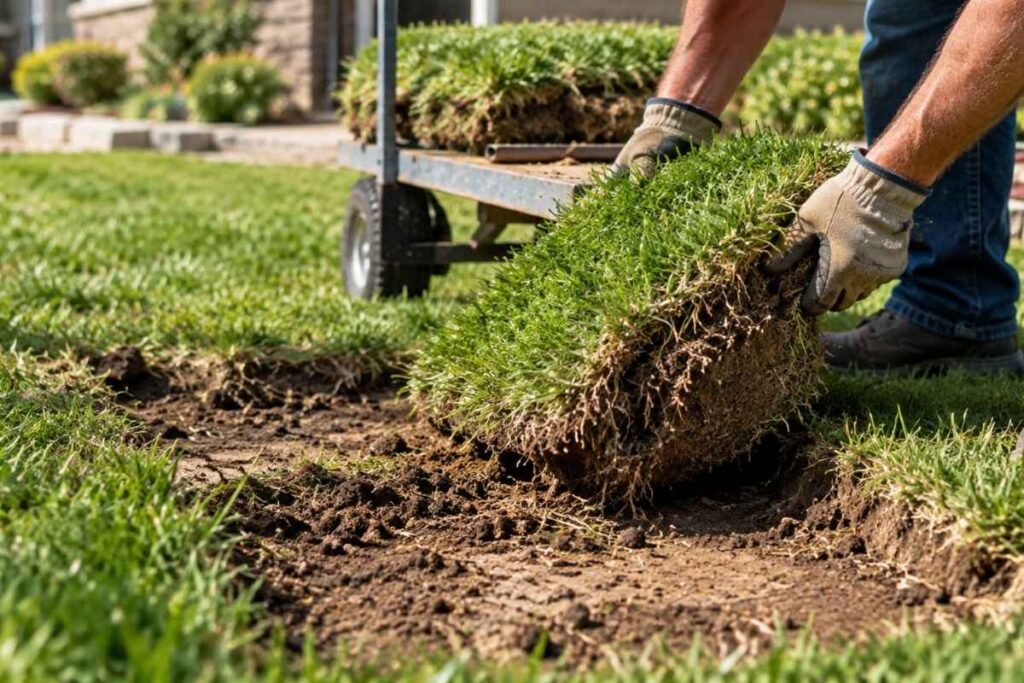
Homeowners should decide what replaces the grass before removing it. Desert plants, mulch, shade trees, stone, paving, and artificial turf all behave differently under intense summer sun. Trees can provide welcome shade, but planting one too close to a house or driveway can create problems later.
Checking the recommended tree planting distances before choosing a location can save another round of yard work. Drainage matters too. Replacing absorbent ground with harder surfaces can change where rainwater goes. One yard problem rarely improves after creating another.
Not Every Patch of Grass Is Useless
City officials say much of the targeted turf sits in parking-lot islands and areas rarely used for recreation. Residents have pushed back against some park conversions, arguing that lawns can provide play space, cooler surfaces, gathering areas, and useful ground around mature trees.
Calling grass functional or nonfunctional sounds simple until somebody has to decide where one category ends and the other begins.
A lawn where children play every afternoon clearly does something. A six-foot strip between a driveway and sidewalk may mainly provide another mowing job.
We would ask one question: If irrigation stopped tomorrow and that patch disappeared, what would you actually lose? You might lose a play area or comfortable space for pets.
Keeping some turf may make sense. You might lose nothing except mowing and one sprinkler head that keeps watering the sidewalk. You should make the decision.
Grass Removal Helps, but It Cannot Carry the Entire Water Problem
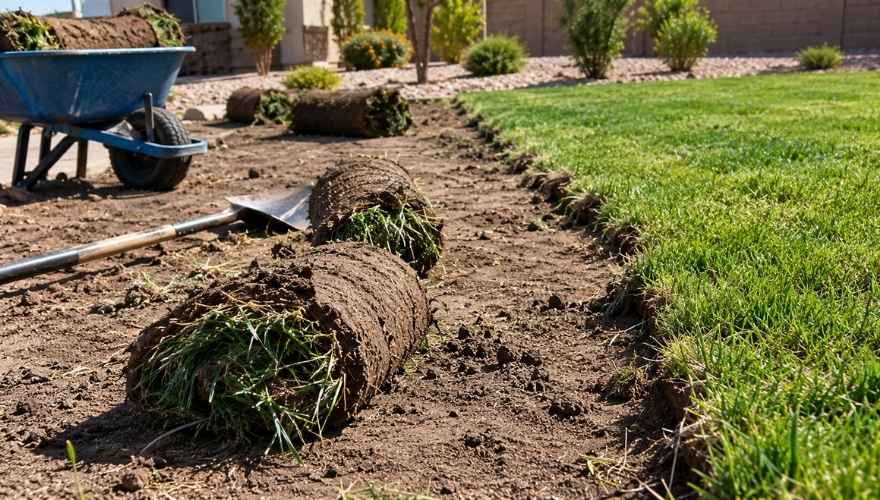
Around 9,000 acres of grass were still present across the Las Vegas Valley by a 2023 count. Nevada initially expected its nonfunctional-turf law to eliminate roughly 3,900 acres.
SNWA later reduced its estimate to about 1,706 acres, while another calculation put the final amount closer to 1,100 acres. Easy targets disappear first.
Decorative roadside strips and unused commercial turf can often go with little disruption. Each round leaves more grass that somebody considers useful.
Clark County was projected to reach 3 million residents by 2035, while Southern Nevada faced a need to cut projected future water demand by more than 100,000 acre-feet annually.
Lawn removal can reduce unnecessary consumption, but cities, homes, businesses, agriculture, population growth, and Colorado River management all affect water demand. Eventually, you run out of obviously pointless grass. Decisions get harder after that.
Remove Lawn That Is Not Earning Its Keep
Las Vegas offers a useful test for almost any yard. Ask what each grassy area provides in exchange for its water, mowing, maintenance, and space.
At roughly 55 gallons saved per square foot each year, removing unnecessary turf can add up quickly. Still, replacing a modest lawn problem with extra heat, poor drainage, or another maintenance headache misses the point.
Keep grass that earns its place. Question grass that exists mostly because it was already there. If nobody walks on it, plays on it, sits beside it, or notices it until the sprinkler stops working, that is probably the patch we would inspect first.
What Our Readers Asked Us
How much can I get for removing grass in Las Vegas?
SNWA offers $5 per square foot for the first 10,000 square feet of qualifying grass removal. Additional turf earns $2.50 per square foot for single-family homes or $1.50 for businesses and HOAs, subject to program conditions.
Who qualifies for the grass removal rebate?
Single-family homeowners, businesses, HOAs, and multifamily property owners can apply. Grass must meet SNWA’s eligibility and irrigation requirements.
Can I remove my grass before applying?
No. You must apply, complete a pre-conversion inspection, and receive approval before removing grass. Starting early can disqualify your project.
Where do I apply?
Apply through SNWA’s official Water Smart Landscapes Rebate program. Choose the application that matches your property type.
Does the 2027 grass ban apply to my backyard?
No. Single-family residential yards are exempt. Starting January 1, 2027, the restriction targets designated nonfunctional grass at commercial properties, multifamily developments, and certain HOA common areas.