Weather forecasts are calling for 27°F tonight, and your sprinkler system is still sitting there full of water.
Winterization was supposed to happen last weekend, but a few other jobs got in the way. Now the weather has decided to stop being patient.
Fortunately, one freezing night doesn’t automatically mean cracked pipes and expensive repairs.
Buried irrigation lines have some protection against sudden temperature changes, although exposed equipment can freeze considerably faster.
Knowing when to winterize sprinkler system components helps prevent those problems.
Ideally, the job should happen a week or two before the first expected hard freeze.
If that opportunity has already passed, there are still sensible ways to protect your system without making a rushed situation worse.
When Should You Winterize Your Sprinkler System?
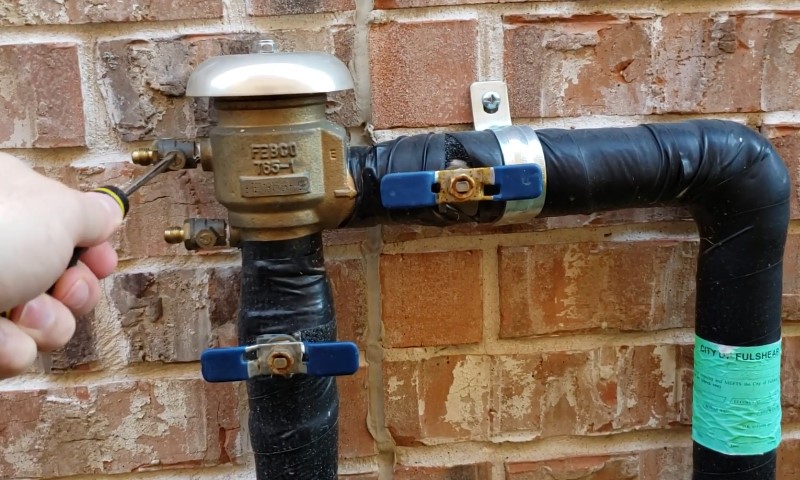
Aim to winterize your sprinkler system about one to two weeks before the first expected hard freeze.
That gives you time to drain the lines, protect exposed equipment, and handle any unexpected problems before freezing weather arrives.
Water freezes at 32°F (0°C), but outdoor irrigation equipment doesn’t necessarily become damaged the moment temperatures cross that mark.
According to the National Weather Service, a hard freeze generally occurs when temperatures reach 28°F (approximately -2°C) or lower for an extended period.
Unprotected outdoor plumbing and sprinkler systems can suffer damage under those conditions.
However, temperature alone doesn’t tell the whole story.
A brief overnight frost might leave buried irrigation lines unaffected, especially when surrounding soil is still relatively warm.
Several consecutive freezing nights create a different situation.
Aboveground equipment deserves particular attention because it lacks the insulation provided by soil.
For homeowners deciding when to winterize, three factors matter most:
- Local climate – Northern regions typically experience freezing weather earlier than southern locations.
- Upcoming forecasts – A sudden cold front can arrive well before the average first-freeze date.
- System exposure – Aboveground pipes, valves, and backflow preventers face greater immediate risk than adequately buried lines.
Average freeze dates are useful planning tools, but they aren’t guarantees.
We would check local first-freeze climatology and upcoming forecasts rather than relying on the same calendar date every year.
If temperatures in the 20s are already appearing in the forecast, the ideal winterization window has probably passed.
That doesn’t mean you’re out of options.
What Happens If Your Sprinkler System Freezes Before Winterization?
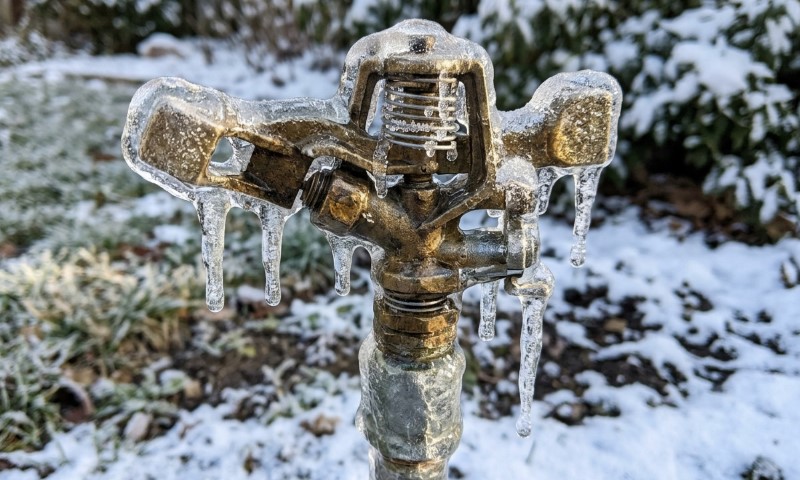
Water expands by approximately 9% when it turns into ice.
Inside an irrigation system, that expansion can create enough pressure to crack pipes, split fittings, or damage equipment that wasn’t designed to accommodate freezing water.
Damage depends on how much water is trapped, how long freezing conditions persist, and which components are exposed.
Some parts are considerably more vulnerable than others.
| Sprinkler component | What freezing water can damage |
| Backflow preventer | Internal valves, seals, and the main housing can crack |
| Underground pipes | Trapped water can split pipes or weaken fittings |
| Sprinkler heads | Plastic housings and internal mechanisms can fracture |
| Irrigation valves | Valve bodies and internal components can suffer damage |
| Exposed fittings | Threaded connections and joints can crack or leak |
Why Backflow Preventers Need Special Attention
A backflow preventer keeps irrigation water out of the household drinking-water supply.
Many installations have a backflow assembly above ground, leaving its internal chambers and fittings exposed to cold air.
Unlike underground pipes, these components don’t benefit much from surrounding soil temperatures.
A backflow preventer can therefore suffer damage during a freeze even when the buried sprinkler lines are unaffected.
Unfortunately, cracks aren’t always obvious immediately.
A fitting may look perfectly normal after temperatures rise, only to start leaking when the irrigation supply is pressurized again.
One short freeze doesn’t guarantee damage. However, assuming everything survived simply because the yard looks normal isn’t a particularly reliable inspection method.
What to Do If the First Hard Freeze Arrives Before You’re Ready
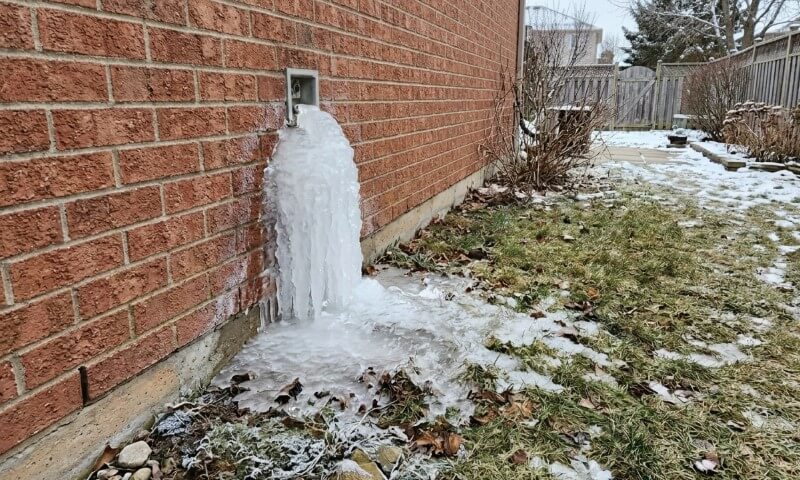
A hard freeze arriving earlier than expected calls for a different approach than routine winterization.
At that point, preventing additional damage matters more than completing every maintenance step perfectly.
If Freezing Temperatures Are Coming Tonight
Start with the irrigation water supply.
Shutting off that supply prevents additional water from entering the system and limits uncontrolled water loss if a component breaks.
After that, work through the following checks:
| Step | What to Do | Why It Matters |
| Shut off water | Close the irrigation shutoff valve. | Stops additional water entering the system. |
| Disable watering | Turn off scheduled irrigation. | Prevents watering during freezing weather. |
| Inspect equipment | Check exposed pipes, fittings, and backflow preventer. | Identifies vulnerable or damaged parts. |
| Drain components | Drain unfrozen equipment according to manufacturer instructions. | Reduces trapped water and freeze damage. |
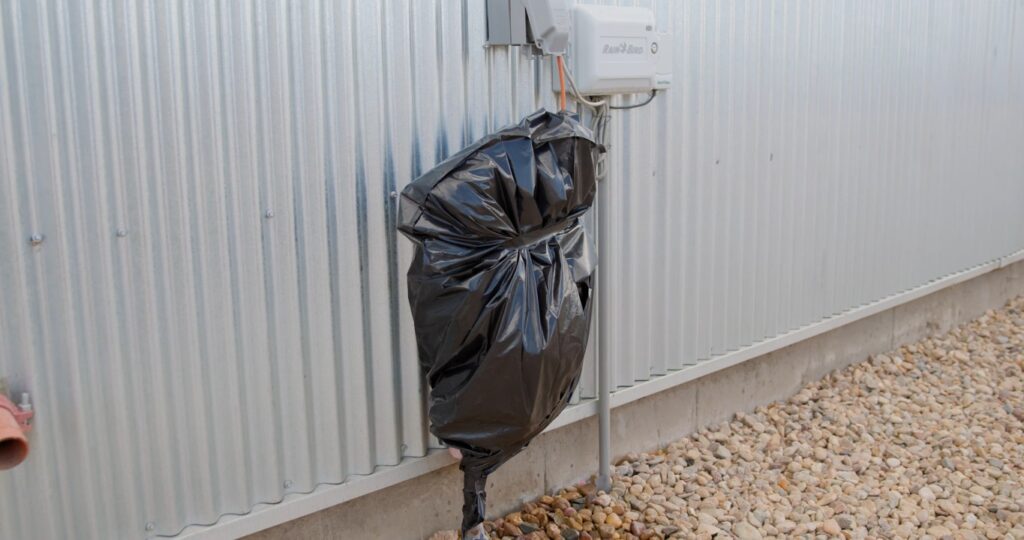
| Add insulation | Insulate exposed equipment temporarily. | Slows freezing but doesn’t replace draining. |
| Schedule winterization | Arrange a professional blowout if safe. | Clears trapped water before temperatures drop. |
One detail is particularly important.
Turning off the controller doesn’t remove water already sitting inside the pipes.
Disabling automatic watering prevents another irrigation cycle. Existing water still needs somewhere to go.
Similarly, shutting off the supply reduces risk but doesn’t completely protect water-filled equipment against freezing.
Consider a sprinkler system facing an overnight low of 27°F, with a backflow preventer mounted beside the house.
If there isn’t enough time for a complete winterization, closing the irrigation supply, disabling the controller, and safely draining the exposed assembly can reduce immediate risks.
Buried zones may still contain water, however, and temporary insulation doesn’t guarantee protection through a prolonged freeze.
That distinction matters because a few sensible precautions are helpful, but they shouldn’t be mistaken for a completed winterization.
If the System Has Already Frozen
A frozen sprinkler system needs considerably less enthusiasm and considerably more patience.
Trying to force ice out of pipes using compressed air is not a particularly good way to rescue equipment that may already be having a difficult day.
Instead:
- Keep the irrigation water supply shut off.
- Avoid operating frozen valves or activating sprinkler zones.
- Allow affected components to thaw naturally.
- Inspect accessible fittings, pipes, and the backflow preventer for visible cracks.
- Arrange proper winterization once components are fully thawed and safe to service.
Avoid using open flames, torches, or concentrated heat to thaw frozen components.
Rapid, uneven heating can damage certain materials and create additional safety risks.
We would also avoid applying compressed air until a qualified technician has confirmed that the system is thawed and suitable for the procedure.
Freezing damage isn’t always immediately visible, so an apparently intact component may still need inspection before pressurization.
How to Winterize a Sprinkler System Properly
Sprinkler winterization generally involves removing enough water to prevent damaging ice formation.
Three main methods are used, depending on the irrigation system’s design.
| Method | How it works | Important limitation |
| Manual draining | Designated drain valves are opened to release water | Only effective when the system is designed to drain properly |
| Automatic draining | Built-in drain valves release water as pressure falls | Water can still collect in low spots or separate components |
| Compressed-air blowout | Controlled compressed air pushes water through irrigation zones | Incorrect pressure, airflow, or technique can damage equipment |
Gravity drainage can work well in appropriately designed systems.
However, underground pipes may shift over time, creating low sections where water collects even after the designated drains have been opened.
A system with automatic drains may also have a backflow preventer or valve assembly requiring separate attention.
Why Air Pressure Isn’t the Only Thing That Matters
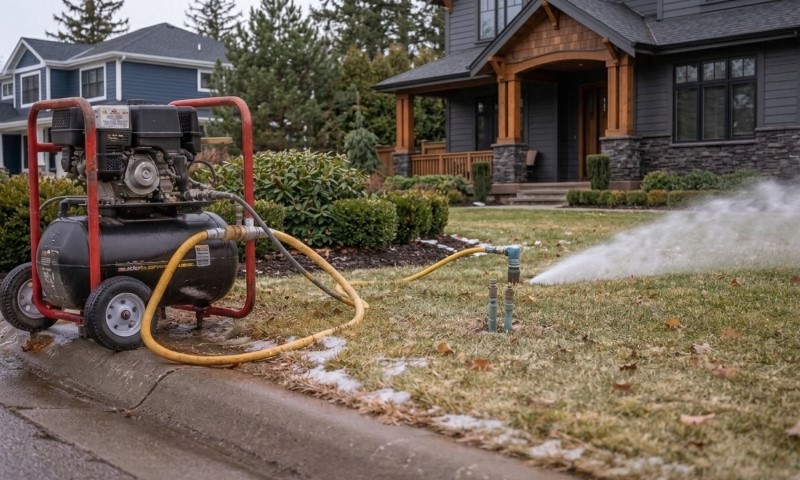
Compressed-air winterization is common in colder climates because it can clear water that gravity drainage might leave behind.
However, higher pressure doesn’t necessarily produce better results.
Colorado State University’s sprinkler winterization guidance, published in 2014, explains that airflow volume is just as important as pressure.
Insufficient air volume can allow air to pass over trapped water rather than pushing it out completely.
Water can then settle into low sections of pipe, leaving vulnerable areas despite an apparently successful blowout.
Published maximum blowout pressures include:
- 50 PSI for polyethylene irrigation pipes
- 80 PSI for rigid PVC irrigation pipes
Those values are upper limits, not recommended operating pressures for every system.
Individual valves, sprinkler heads, fittings, and other equipment may require lower settings.
Manufacturer winterization safety instructions also warn against forcing compressed air through backflow preventers or pumps.
Eye protection is essential, and nobody should stand directly over pressurized irrigation components.
Excessive pressure can damage pipes and sprinkler heads, while prolonged airflow can create additional problems.
We would recommend professional blowout service whenever pipe materials, system layout, compressor capacity, or operating procedures are uncertain.
A standard household air compressor isn’t automatically suitable simply because its pressure gauge displays an impressive number.
How to Tell If Freezing Weather Damaged Your Sprinkler System
Freeze damage can be frustrating because it doesn’t always announce itself during winter.
Some cracks only become obvious when the irrigation system is pressurized during spring startup.
Fortunately, several symptoms can help narrow down the problem.
| What you notice | What to check first |
| Water leaking around the backflow preventer | Cracked housing, damaged fittings, or failed internal components |
| Water pooling near sprinkler heads | Broken heads, damaged connections, or leaking underground pipes |
| Low pressure in one irrigation zone | Possible pipe leaks or damaged zone components |
| Sprinkler heads failing to rise | Damaged heads, restricted flow, or insufficient pressure |
| Water flowing when irrigation is off | Leaking valves or damaged components |
Start with visible equipment before assuming an underground pipe has failed.
A cracked fitting near the backflow preventer is much easier to identify than a leak hidden beneath several inches of soil.
If an irrigation zone has unusually low pressure, inspect the accessible heads and connections before considering underground excavation.
Similarly, a sprinkler head that won’t rise isn’t automatically evidence of freeze damage. Dirt, debris, and ordinary mechanical wear can produce similar symptoms.
During a controlled spring startup, irrigation zones should be checked individually for abnormal pressure, leaks, and malfunctioning heads.
Any suspected major leak warrants shutting off the irrigation supply and having the affected components inspected.
Avoid repeatedly cycling a damaged system just to see if the problem disappears.
Water escaping beneath the lawn is unlikely to improve matters through repetition.
A Late Winterization Is Better Than None
Ideally, winterize your sprinkler system one to two weeks before the first expected hard freeze.
If freezing weather is approaching tonight, shut off the irrigation supply, disable automatic watering, and safely drain or protect vulnerable exposed components.
If the system has already frozen, allow it to thaw and check for damage before attempting winterization.
One freezing night doesn’t automatically mean your sprinkler system needs repairs.
But if water is still sitting inside the lines, we wouldn’t leave it there to see how the rest of winter goes.
Get the system properly drained before the next freeze.